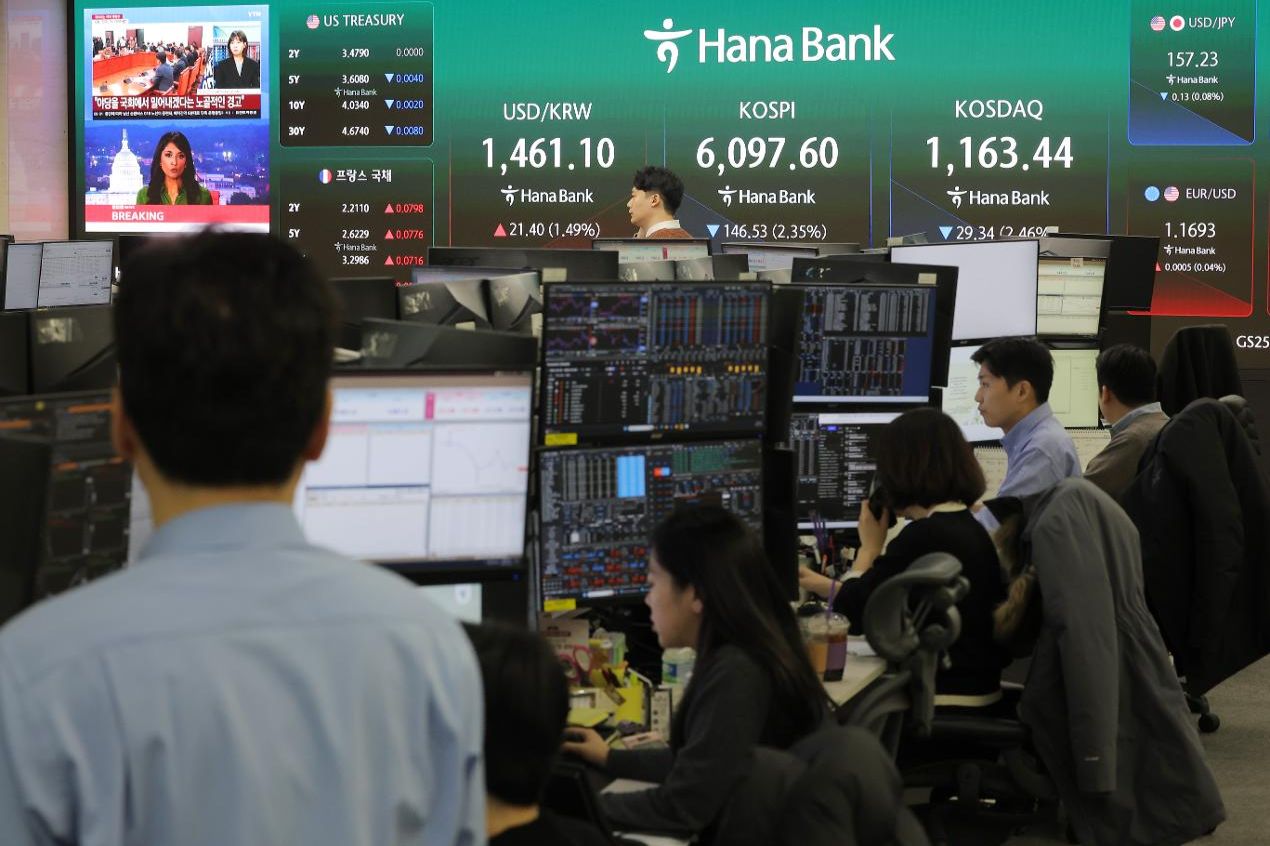
HONG KONG — When U.S. and Israeli forces launched massive airstrikes against Iran, Korean markets swung to extremes. On March 3, the first trading day after the attack, the benchmark KOSPI tumbled 7.24 percent, tripping a sell-side circuit breaker. Losses deepened the following day, with the index down as much as 12 percent at one point — worse than the declines seen after the 9/11 attacks in 2001. The rout quickly reversed. On March 5, KOSPI surged 9.63 percent, its biggest one-day gain on record, activating a buy-side circuit breaker. Such swings contribute to the “Korea discount,” said Peter S. Kim, a global investment strategist at KB Financial Group, referring to the chronic undervaluation of Korean-listed companies. Kim, who also serves as senior managing director and head of the global business and wholesale division at KB Securities, has over 30 years of experience in the industry. He has held leadership roles on both the buy and sell side, ranging from country CEO of HSBC Securities Korea to founding a pan-Asia hedge fund in Hong Kong. Korea’s retail investors are known